

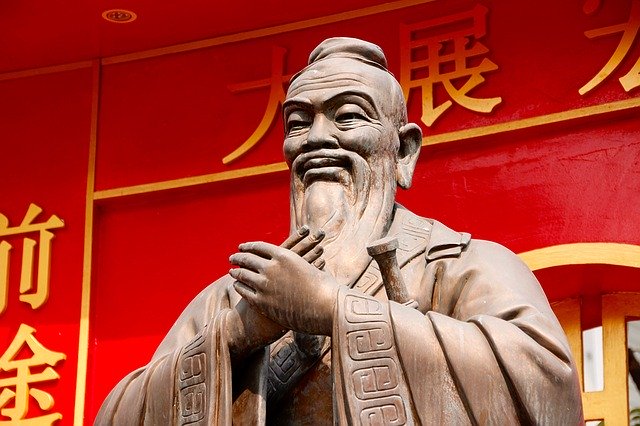
To learn something and regularly practice it -- is it not a joy? To have schoolfellows come from distant states -- is it not a pleasure? Not to blame when men do not accept you -- is it not like a gentleman? - Confucius (551? - 479B.C.): Lun Yü [The Analects (of Confucius)] (trans. by Kô Shyôrin (1958 - ))
(Image by Peggy und Marco Lachmann-Anke from Pixabay)
(Text-to-Speech by Sound of Text, using the engine from Google Translate)
(←クリックでこの名言の日本語を表示)
(←クリックでこの名言の日本語を隠す)
(子曰く、)学びて時にこれを習う、また説ばしからずや。朋有り遠方より来たる、また楽しからずや。人知らずして慍みず[慍らず]、また君子ならずや。 - 孔子 (紀元前551? - 前479): 『論語』学而
/ ([(漢)学而時習之、不亦説乎。有朋自遠方来、不亦楽乎。人不知而不慍、不亦君子乎。])

![IMAGE: The usefulness of (the) useless. [Everyone knows the usefulness of useful things, but no one knows the usefulness of useless things. / Everyone knows the use of the useful, but not the use of the useless.] (Even if something did not bring immediate benefit, it could still turn out to be valuable.)](https://www.ok312.net/wp-content/uploads/2026/01/place-name-sign-822236_640-100x71.jpg)





![IMAGE: Expectation is better than realization. / There is a great difference between the fame and the reality. [The reality falls far short of the fame.] / The reality (always) falls short of the fame. [The reality often belies the fame.]](https://www.ok312.net/wp-content/uploads/2017/12/i-do-not-see-2384621_640-100x68.jpg)