第一歩こそが…
![IMAGE: It is the first step that is troublesome [difficult]. [The first step is always the hardest.]](https://www.ok312.net/wp-content/uploads/2019/12/boy-1272637_640-200x112.jpg)
第一歩こそが大問題。[はじめの一歩がいつも一番大変。] (Arek SochaによるPixabayからの画像) (Google Translateのエンジンを使用した、Sound of Textによるテキスト読み上げ) More »

第一歩こそが大問題。[はじめの一歩がいつも一番大変。] (Arek SochaによるPixabayからの画像) (Google Translateのエンジンを使用した、Sound of Textによるテキスト読み上げ) More »

It cannot be too often repeated that it is not helps, but obstacles, not facilities, but difficulties that makes men. – William Matthews (Image by Patrick Neufelder from Pixabay) (Text-to-Speech by Sound of Text, using the engine from Google Translate) More »
何度でも言うが、差し出される手ではなく立ち塞がる壁が、順境ではなく逆境が人を育てる。 – ウィリアム・マシューズ (Patrick NeufelderによるPixabayからの画像) (Google Translateのエンジンを使用した、Sound of Textによるテキスト読み上げ) More »

Everyone has his particular habit. / Every man has his faults. – William Shakespeare (1564 – 1616): Timon of Athens (Image by Lemonsandtea on Pixabay) (Text-to-Speech by Sound of Text, using the engine from Google Translate) More »
無くて七癖(、有って四十八癖)(なくてななくせ、あってしじゅうはっくせ)。[人に一癖(ひとにひとくせ)。/人に七癖、我が身に八癖(ひとにななくせ、わがみにやくせ)。](日本の諺) / 人それぞれに癖がある。 / 人には誰にも欠点がある。 – ウィリアム・シェイクスピア (1564 – 1616): 『アテネのタイモン[アセンズのタイモン]』 (Image by Lemonsandtea on Pixabay) (Text-to-Speech by Sound of Text, using the engine from Google Translate) More »
![IMAGE: Every path has a puddle. [Every path has its puddle.]](https://www.ok312.net/wp-content/uploads/2019/02/puddle-3878175_640-200x133.jpg)
Every path has a puddle. [Every path has its puddle.] / (Progress is rarely without difficulty.) More »
どんな道にも水溜まりはある。 / (困難を伴わない進歩はめったにない。) More »

Everyone has talent at twenty-five. The difficulty is to have it at fifty. – Edgar Degas (1834 – 1917) More »
誰でも二十五の時には才能がある。難しいのは五十になった時それが残っているかだ。 – エドガー・ドガ (1834 – 1917) More »
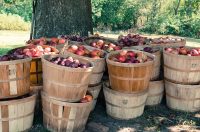
Many words will not fill a bushel basket. / (A “bushel” is a unit of volume that is used for measuring agricultural produce such as grain, beans, vegetables or fruit.) / Wealth of words is not eloquence. More »

![IMAGE: Patriotism is your conviction that this country is superior to all others because you were born in it. [Patriotism: Your conviction that this country is superior to all other countries because you were born in it. / Patriotism is, fundamentally, a conviction that a particular country is the best in the world because you were born in it.]](https://www.ok312.net/wp-content/uploads/2025/10/ai-generated-9017144_640-100x67.jpg)